
First impression is the last impression, and on a website, in most cases, your landing page is that first impression. Whether you’re selling a product, collecting email subscribers, or promoting an event, a well-designed website landing page can be the difference between a bounce and a conversion. In this blog, we will cover everything you need to know about a website landing page, from what they are and why they are important to how to design and build one.
What is a website landing page?
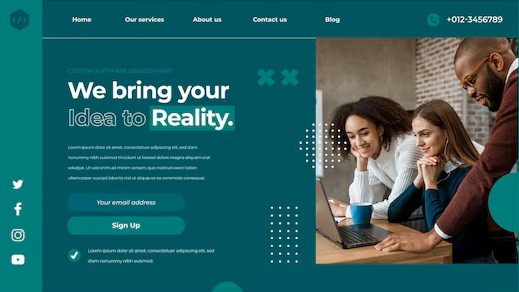
A landing page is a single webpage with the intention of marketing or advertising a campaign. It is the page where a visitor is redirected to when he/she click on a link in a mail, ad, or a search engine result. Unlike other pages in a website, a web landing page has a clear purpose: to drive a visitor to a single call to action (CTA). These call to actions can vary with the intent they are created with. Some common web landing pages are:
- Getting visitors to sign up for a newsletter
- Encouraging product purchases
- Collecting contact information
- Registering for a webinar or event
- Downloading an eBook or resource
Why is a landing page important?
1. High Conversion Rate
A website landing page has a higher potential for driving conversions than the rest of the pages of website. They are optimised for a specific call to action, which is more likely to be followed through by the visitors. Landing pages are designed in such a way that they appear more appealing and are effective in performing their function.
2. Better tracking and analytics
Since each web landing page is created with an intent of running a specific campaign, it becomes easier to track its performance metrics, such as what are the conversion rate, bounce rate, and average time spent by a visitor on the page. By tracking the performance of the landing page, you can take further actions, like what to do next after driving conversions, or whether there is any need for adjustments.
3. Improved User Experience:
A well-structured and designed web landing page gives visitors exactly what they’re looking for, including the necessary information, which potentially drives them into a conversion and increases trust and engagement.
4. Diversification
Unlike the other pages, a website landing page can be created more than once. You can create different landing pages based on the different audience segments, and personalize the content of each landing page based on the needs and interests of the targeted audience.
Key Elements of an Effective Landing Page
Building a landing page for a website requires knowledge of the basic structure according to which a web landing page should be created and designed.
1. Headline
Your headline is the first thing users will see. It should be clear, concise, and convey the main benefit of your offer.
2. Sub-headline
Sub-headline should support the main headline and should provide further information on what it is that is being offered to them.
3. Visual Elements
Using visual elements like images, graphics, or videos that are relevant to your web landing page can enhance the engagement of the visitor and might clear some of the doubts they might have. A visual preview of a product or a demo video on how to use that product can significantly increase engagement.
4. Value Proposition
Building a website landing page involves explaining what value the users will get or what solution you will be providing to their problem, and why it’s valuable. Clear and concise bullet points can help break down key features or benefits of your product or service.
5. Call to Action (CTA)
This is the most critical part. Use buttons like “Download Now,” “Get Started,” “Register Free,” or “Book Now.” The call to action button should be highly visible and persuasive in your web landing page, which can make the visitor click on it and perform the task required of them.
6. Lead Capture Form
If your goal is to collect information about whoever visits your website, include a simple form. Only ask for essential details like name, occupation, email, etc., to reduce friction.
7. Trust Signals
Including testimonials, reviews, security badges, or logos of well-known clients, and even some sort of certification, can build credibility for your business.
8. Mobile Friendly
Make sure that the landing page is mobile-friendly while creating a landing page for a website, as more than half of web traffic comes from mobile phone users, so make sure your landing page is mobile-friendly, responsive, and loads quickly on all screens.
Types of Landing Pages
1. Lead Generation Landing Pages
This type of website landing page is used to collect user information through forms, often in exchange for something valuable like a free ebook, consultation, or discount.
2. Click-Through Landing Pages
These landing pages guide users to another page, usually to complete a transaction. They are commonly used in e-commerce or product sales funnels.
3. Sales Pages
Long-form landing pages that provide detailed information about a product or service before asking for a purchase.
4. Thank You Pages
These come after the conversion and are used to acknowledge the action, confirm details, or present next steps.
Common Mistakes to Avoid
- Too Many CTAs: Stick to one goal per landing page.
- Vague Headlines: Make sure users immediately understand the purpose of the page.
- Asking for Too Much Info: Long forms can scare people away.
- Ignoring Mobile Users: A non-responsive page will hurt your conversion rates.
- Not Testing: Never assume your first version is the best—test and refine continuously.
A website landing page is not just a page on your website—it’s a powerful tool that, when designed effectively, can dramatically improve your marketing performance and drive conversions. By focusing on a single objective, delivering a compelling message, and removing distractions, you guide your visitors toward taking meaningful action. Whether you’re a marketer, business owner, or freelancer, mastering the art of creating a landing page will give you a significant edge in achieving your online goals. Remember, a great landing page doesn’t just attract visitors—it converts them.